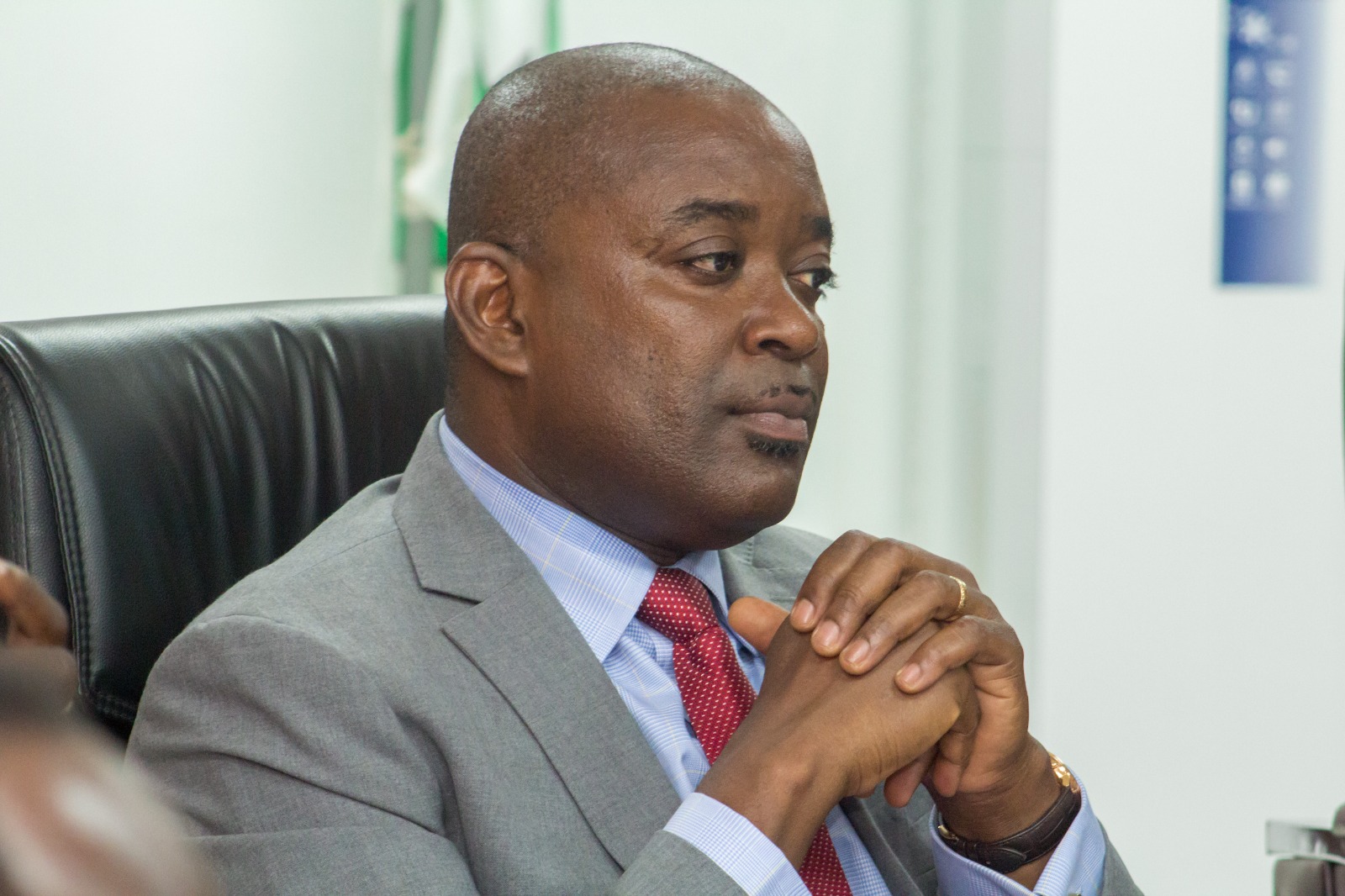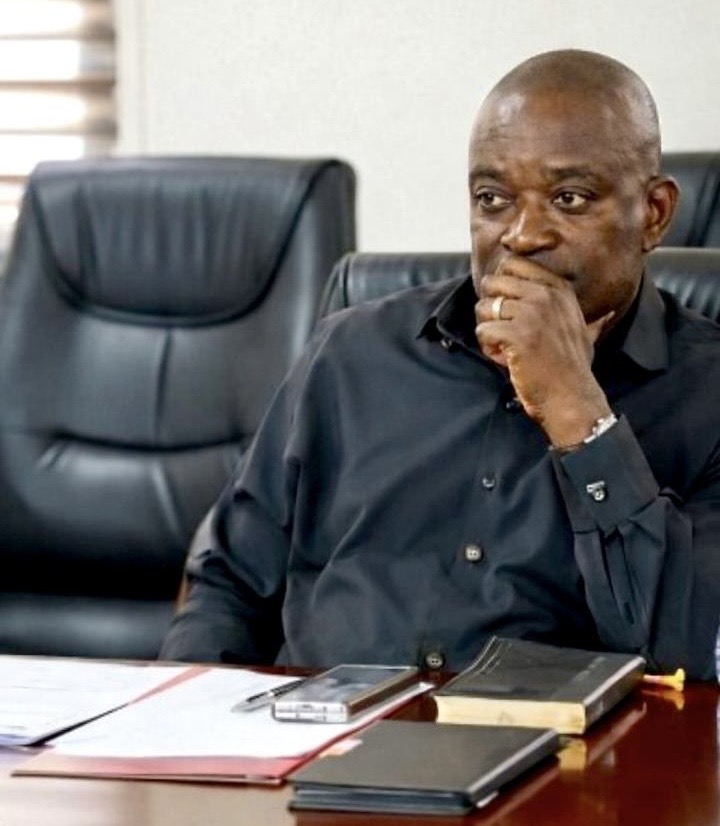
The undersigned in Ghana’s tertiary education sector hereby unequivocally declare our full solidarity with the University Teachers’ Association of Ghana, University of Ghana Branch (UTAG–UG), in its principled, lawful, and demand for the immediate removal of Prof. Ahmed Jinapor Abdulai, Director-General of the Ghana Tertiary Education Commission (GTEC).
This press statement is issued against the backdrop of persistent regulatory failure, selective application of authority, abuse of office, conflict of interest, and the apparent cover-up of deep-rooted governance decay across several tertiary institutions, most notably the Ghana Communication Technology University (GCTU).
1. Failure of Regulatory Integrity and Conflict of Interest
At the heart of this crisis lies the continued and inexplicable refusal of Prof. Ahmed Jinapor Abdulai to formally recognise, sanction, or decisively act on the widely documented and formally petitioned case involving his close associate, Ms. Vera Graham Asante, who continues to present herself as “Dr.” after acquiring a doctoral degree in 2021 from an institution that was neither recognised nor accredited by GTEC, and which had already attracted regulatory warnings even before that period of 2021.
Despite:
· A formal petition submitted to GTEC,
· Clear documentary evidence establishing that the awarding institution was unaccredited, and
· The unambiguous provisions of Act 1023, which impose a statutory duty on GTEC to regulate, sanction, and protect the integrity of Ghana’s academic space,
Prof. Jinapor Abdulai has failed, refused, and neglected to issue any public determination, withdrawal notice, or enforcement directive.
This prolonged silence and inaction constitute nothing short of gross dereliction of duty, regulatory capture, and a clear conflict of interest, and they fundamentally undermine the credibility, authority, and moral legitimacy of GTEC as a national regulator.
2. Abuse of Office and Deliberate Misrepresentation of Academic Standards
The programme completed by Ms. Vera Graham Asante does not meet Ghana’s doctoral standards, violates GTEC’s own policies on unaccredited degrees, and cannot, under any legitimate academic or regulatory interpretation, be classified as a PhD.
Yet, astonishingly, Prof. Jinapor Abdulai has publicly and administratively treated his doctoral degree as a “PhD equivalent” and likewise Vera’s Doctorate, even though:
· The awarding institution of Vera’s degree was not accredited,
· The programme was not recognized by GTEC after NAB declaration and recent GTEC’s communications, and
· The qualification does not satisfy any known PhD level quality assurance benchmarks in Ghana.
This action represents a dangerous abuse of office, a distortion of academic standards, and a direct assault on the integrity of Ghana’s higher education system.
3. Erosion of Public Trust and Institutional Credibility
It is rumored that Ms. Vera Graham Asante and Prof. Jinapor Abdulai as well as other GCTU members maintain a close and sustained communication relationship, raising serious and unavoidable questions about regulatory impartiality, ethical governance, and conflict of interest at the highest level of GTEC.
While this matter demands formal investigation, the pattern of protection, silence, and regulatory paralysis speaks for itself.
Evidence:


https://site.gctu.edu.gh/staff/directors-and-deans/dr-vera-graham-asante.aspx
4. Suppression of the GCTU Audit Report and Abuse of Supervisory Authority
Further evidence of regulatory misconduct and institutional protectionism is found in the GCTU audit exercise conducted under the supervision of Prof. Augustine Ocloo, the Deputy Director-General of GTEC.
Prof. Augustine Ocloo was formally mandated by GTEC to audit Ghana Communication Technology University (GCTU) following widespread concerns regarding fake credentials, financial mismanagement, procurement irregularities, and governance failures within the university.
However, to date, the outcome of this audit has neither been published nor acted upon.
Instead:
· The audit report has been effectively buried,
· Repeated formal and informal demands for its release have been ignored, and
· GTEC has become increasingly evasive whenever the report is requested.
This raises a grave and unavoidable question: What is being concealed, and who is being protected?
5. Irregular Appointment and Continued Protection of the Vice-Chancellor of GCTU
Equally disturbing is the case of the current Vice-Chancellor of GCTU, whose tenure has been persistently surrounded by credible allegations of financial mismanagement, administrative impropriety, and governance breakdown.
Despite these unresolved concerns:
· The Vice-Chancellor has been approved and maintained in office with the active support of Prof. Ahmed Jinapor Abdulai, after his expired secondment from previous government.
· While serving on secondment from the University of Ghana till date after the previous President of GCTU was removed in 2018,
Yet, under established public service and higher education governance rules, secondments of this nature require approval from either the Minister of Education or the President, not unilateral authorization by the Director-General of GTEC.
It is now evident that:
Prof. Jinapor has effectively arrogated to himself powers he does not possess, acting as the sole authority determining appointments, approvals, and institutional outcomes across public tertiary institutions.
Even more troubling is the fact that the Minister of Education appears to have been deliberately kept in the dark.
6. Shielding of Fake Credentials and Institutionalised Regulatory Complicity
It is further established that several cases of questionable and outright fraudulent academic credentials at GCTU have been brought to the attention of GTEC.
Yet:
· No decisive sanctions have followed,
· No public determinations have been issued, and
· No credible enforcement action has been taken.
Instead, these cases appear to have been systematically shielded under the watch of Prof. Jinapor Abdulai, while the audit findings led by Prof. Augustine Ocloo have been rendered administratively useless and operationally invisible.
This pattern confirms the existence of institutionalized regulatory complicity and selective justice.
8. The Broader Pattern of Regulatory Breakdown Across the Tertiary Sector
The crisis at GCTU is not an isolated incident. It is merely the most visible manifestation of a broader and deeply troubling pattern of regulatory breakdown, selective enforcement, and governance distortion across multiple tertiary institutions.
Under the leadership of Prof. Ahmed Jinapor Abdulai, GTEC has increasingly ceased to function as an impartial regulator and has instead come to be perceived as:
· A political or personal power-brokering centre;
· An instrument for settling institutional scores; and
· A shield for favoured individuals and allied administrators.
This has created a climate of fear, uncertainty, and administrative paralysis within universities, where compliance with the law is no longer sufficient—one must also be politically or personally aligned to be safe.
9. Damage to Ghana’s International Academic Reputation
The consequences of this regulatory decay extend far beyond internal governance disputes.
Ghana’s tertiary education system depends on:
· International recognition of its degrees,
· Mutual accreditation arrangements, and
· Global academic mobility and partnerships.
When the national regulator is perceived to tolerate unaccredited degrees, protect credential fraud, and manipulate quality assurance processes, the international credibility of Ghanaian qualifications is placed at serious risk.
This is not a theoretical concern. It threatens:
· Student mobility,
· Staff exchange programmes,
· International research collaboration, and
· The standing of Ghana’s universities in global ranking and accreditation systems.
10. The Imperative for Immediate Institutional Reset at GTEC
What is required now is not cosmetic reform, not damage control, and not internal “reviews.”
What is required is a decisive institutional reset. This must include:
· The immediate removal or resignation of the current GTEC leadership;
· The appointment of an interim, credible, and independent leadership team;
· A comprehensive forensic review of major regulatory decisions taken over the past years; and
· The public restoration of transparent, rules-based regulation in the tertiary sector.
Without this, confidence in the regulatory system cannot and will not be restored.
11. A Direct Appeal to the President of the Republic
We respectfully but firmly call on His Excellency the President of the Republic of Ghana
to treat this matter with the utmost national urgency. This is no longer:
· An internal university dispute, or
· A disagreement between UTAG and a regulatory agency.
It is now a matter of national institutional integrity, public trust, and the future of Ghana’s higher education system.
History will not judge kindly any administration that looked away while the foundations of academic credibility were being systematically eroded.
12. Final Notice
Let this serve as formal and public notice:
If decisive action is not taken immediately, the undersigned and allied stakeholders will proceed with:
· Structured public disclosures;
· Formal petitions to state oversight bodies;
· International notifications to relevant bodies and media
· Etc.
13. Conclusion
Ghana’s universities are national assets. They must not be held hostage by regulatory abuse, personal networks, or institutionalized impunity.
The time for silence, fear, and appeasement is over.
The time for accountability, transparency, and institutional rescue is now.